
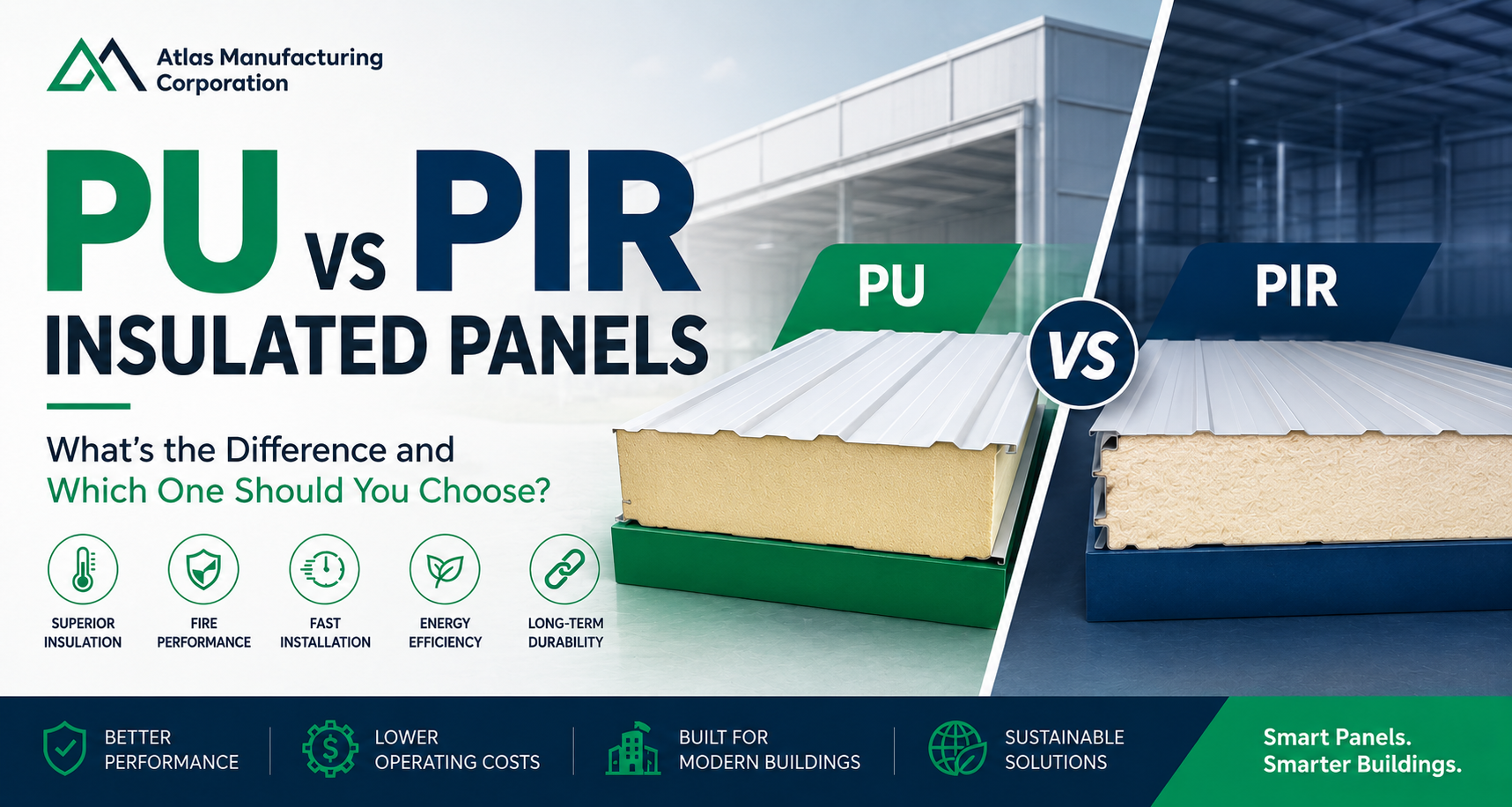
Not All Insulated Panels Are the Same: PU vs PIR Explained
What’s the Difference and Which One Should You Choose?
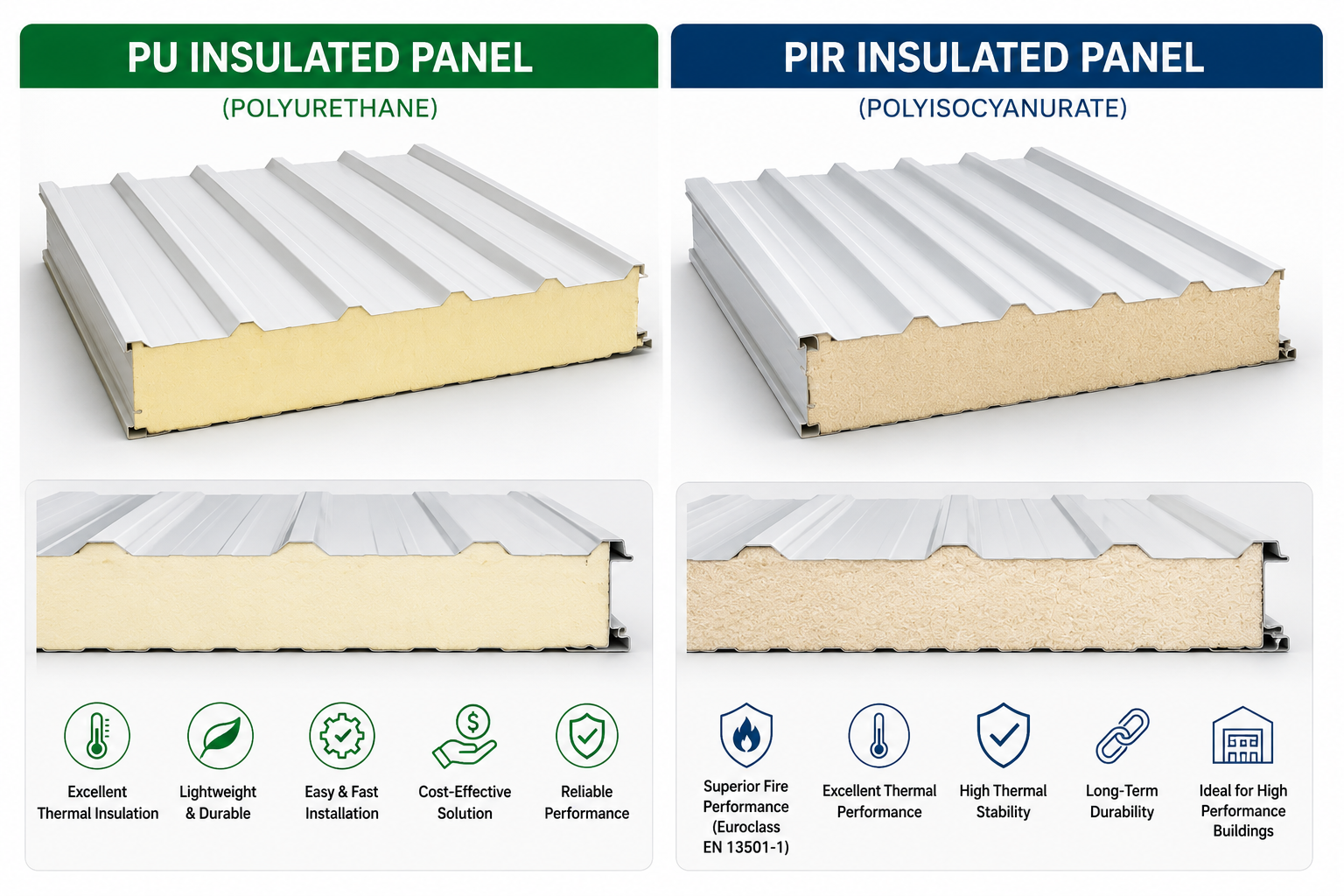
PU vs PIR Insulated Panels
What’s the Difference and Which One Should You Choose?
In today’s construction industry, energy efficiency, thermal performance, and long-term durability are no longer optional — they are essential. Whether you are building a warehouse, factory, cold storage facility, commercial building, or modern industrial plant, choosing the right insulated panel system can significantly impact operating costs, comfort, and building performance.
At Atlas Manufacturing Corporation, we manufacture high-quality insulated roofing and wall panel systems designed to meet the growing demand for efficient and reliable building solutions in the Philippines.
Two of the most commonly used insulation cores today are PU (Polyurethane)and PIR (Polyisocyanurate) insulated panels. While they may look similar from the outside, their performance characteristics differ in important ways.
What is PU Insulated Panel?
PU stands for Polyurethane Foam. PU insulated panels are known for their excellent thermal insulation properties, making them highly effective in reducing heat transfer and maintaining cooler indoor temperatures.
Key Advantages of PU Panels
Superior thermal insulation
Lightweight construction
Energy-efficient performance
Faster installation
Reduced cooling costs
Smooth and clean finish
PU panels are widely used in tropical climates like the Philippines because they help reduce indoor heat gain and lessen air-conditioning loads.
Best Applications for PU Panels
Warehouses
Commercial roofing
Office buildings
Poultry farms
General industrial buildings
What is PIR Insulated Panel?
PIR stands for Polyisocyanurate Foam. PIR panels are an advanced version of polyurethane insulation with enhanced fire-resistant properties and improved thermal stability.
While PIR offers similar insulation performance to PU, its biggest advantage is its improved behavior under high temperatures and fire exposure.
Key Advantages of PIR Panels
Enhanced fire performance
Excellent thermal insulation
Higher temperature resistance
Improved structural stability
Long-term durability
Better compliance for stricter building requirements
Best Applications for PIR Panels
Cold storage facilities
Food manufacturing plants
Pharmaceutical facilities
High-specification industrial buildings
Projects with stricter fire requirements
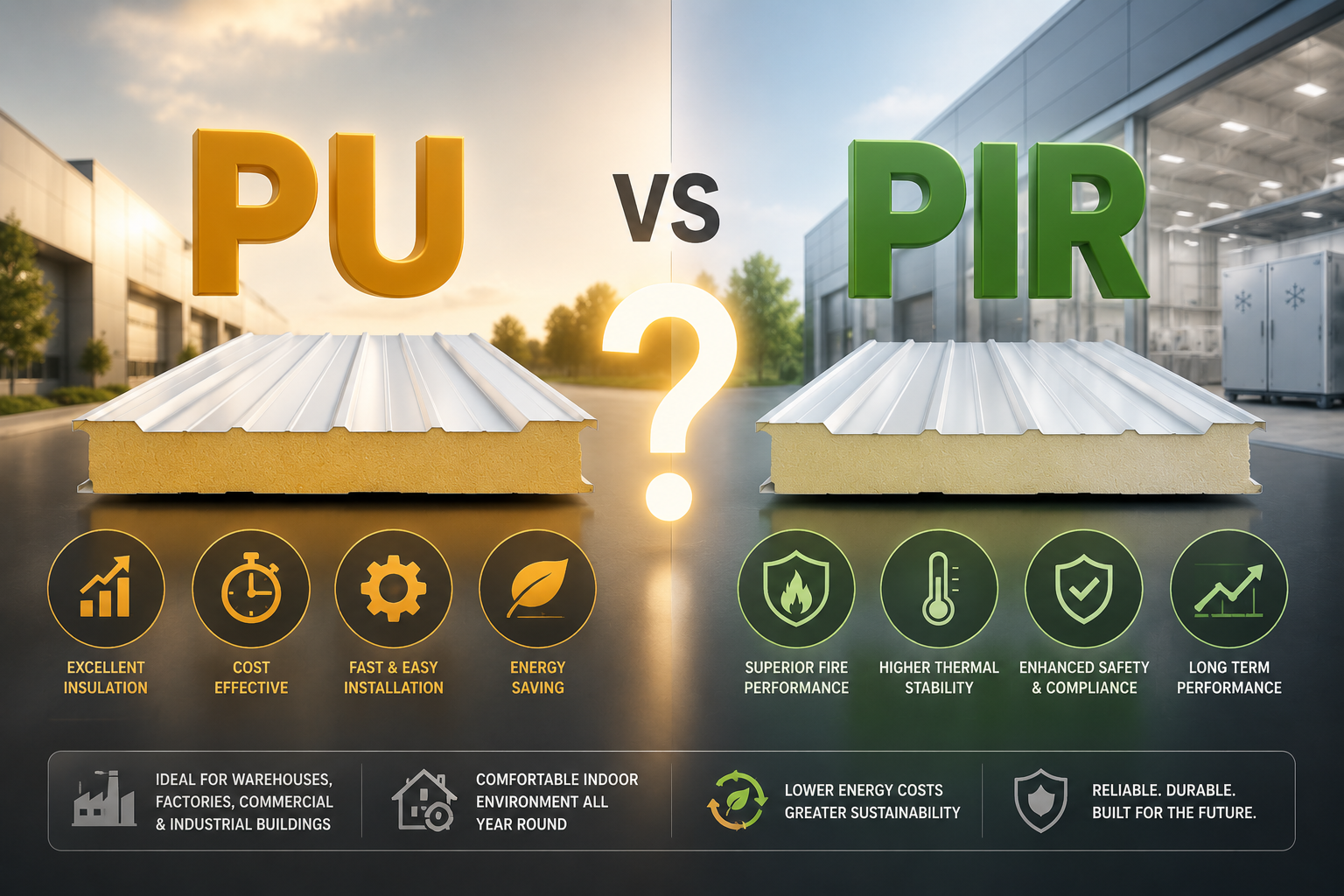
PU vs PIR: What’s the Main Difference?
It All Begins Here
1. Fire Performance
This is the biggest difference between the two.
PU Panels-PU foam is combustible and may burn faster under direct flame exposure.
PIR Panels-PIR foam forms a protective carbonized layer when exposed to fire, slowing flame spread and improving fire resistance.
Many PIR insulated panels are also tested under the Euroclass Fire Classification Standard (EN 13501-1), which evaluates how construction materials react to fire.
Under this European standard:
PU panels generally achieve lower fire performance classifications.
PIR panels can achieve higher classifications such as Euroclass B-s1,d0, depending on the panel system and manufacturer testing.
This makes PIR panels a preferred choice for projects with stricter fire safety requirements, industrial facilities, cold storage applications, and buildings requiring enhanced compliance standards.
If fire performance and regulatory compliance are major considerations, PIR is generally the better option.
2. Thermal Insulation
Both PU and PIR provide excellent insulation performance compared to traditional roofing systems.
However, PU typically offers slightly better initial insulation value and PIR maintains insulation performance more effectively under higher temperatures.
In real-world applications, both systems deliver excellent energy savings.
3. Cost
PU Panels
Generally more economical and cost-effective for standard industrial projects.
PIR Panels
Typically more expensive due to enhanced fire-resistant properties and more advanced formulation.
4. Application Requirements
Choose PU when:
Budget is the priority
Standard industrial insulation is sufficient
Fire requirements are less demanding
Choose PIR when:
Fire safety is critical
The project has stricter compliance standards
Long-term performance under higher temperatures is important
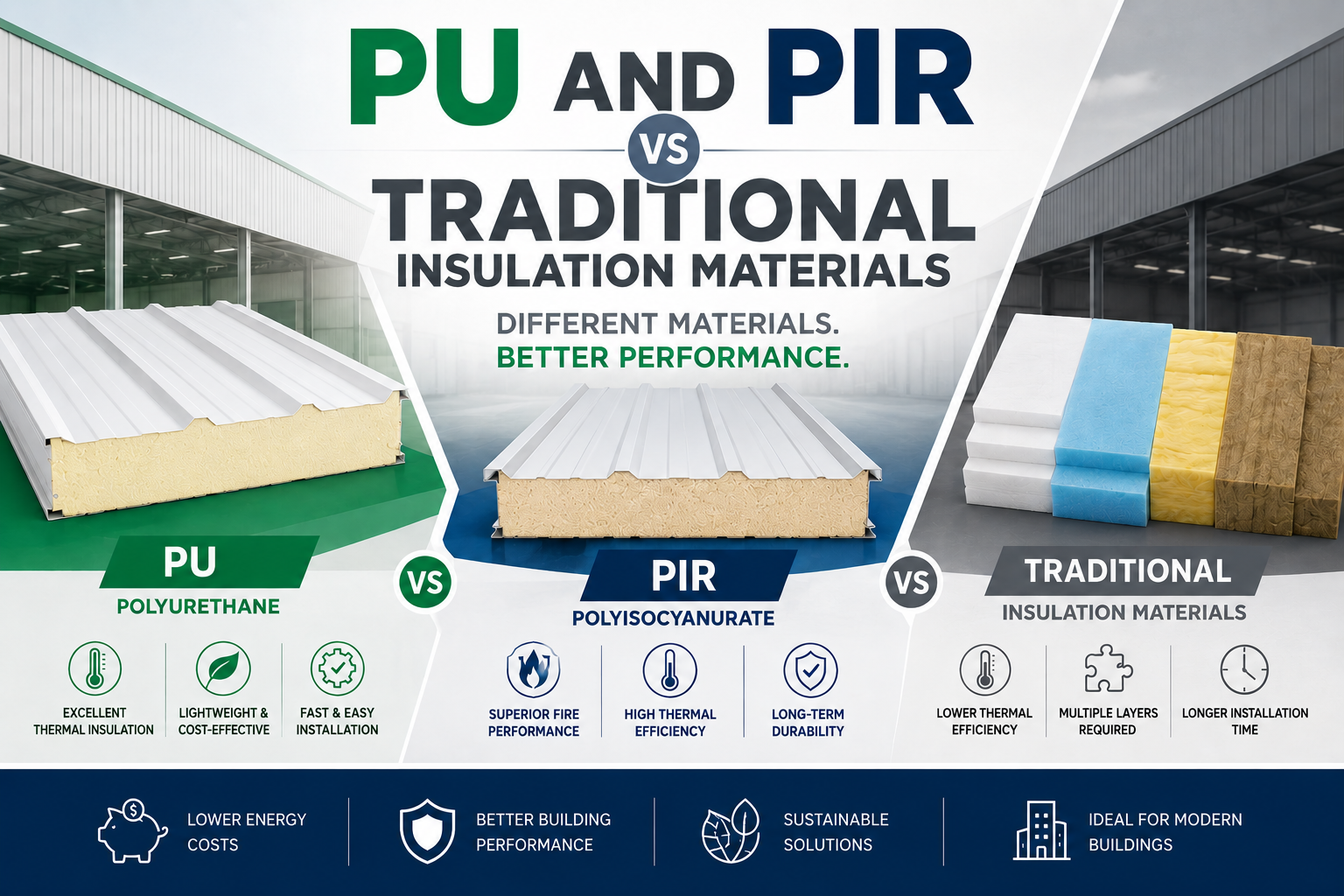
PU and PIR vs Traditional Insulation Materials
It All Begins Here

Many clients ask how PU and PIR compare against traditional insulation systems like EPS or XPS.
PU/PIR vs XPS
Advantages of PU/PIR Panels Over XPS
Better thermal efficiency per thickness
Integrated roofing and insulation system
Faster installation
Reduced thermal bridging
Cleaner appearance
Better structural integrity
Lower long-term operating costs
Why Contractors Prefer PU/PIR Sandwich Panels
Instead of installing separate roofing sheets and insulation layers, insulated sandwich panels combine everything into one system:
Roofing
Insulation
Interior finish
This simplifies installation and improves consistency across the project.
Choosing between PU and PIR insulated panels ultimately depends on your project requirements, performance expectations, and budget. If you are looking for a more budget-friendly insulated roofing solution for standard industrial or commercial applications, PU panels are an excellent choice due to their strong thermal insulation and cost efficiency. On the other hand, if your project prioritizes maximum fire performance, enhanced safety standards, and long-term thermal stability, PIR panels are the better option. PIR panels are especially recommended for cold storage facilities, food processing plants, pharmaceutical buildings, and higher-spec industrial projects where stricter fire compliance is required. For standard warehouse roofing and general-purpose industrial buildings, PU panels are commonly preferred because they provide reliable insulation at a more economical cost. Meanwhile, both PU and PIR panels are excellent solutions for modern energy-efficient buildings, helping reduce heat transfer, improve indoor comfort, and lower operating costs over time.

Why Choose Atlas Manufacturing Corporation?
It All Begins Here
At Atlas Manufacturing Corporation, we provide high-quality insulated panel solutions engineered for Philippine conditions.
What We Offer
PU Roof Panels
PIR Roof Panels
Cold Storage Panels
Wall Cladding Systems
Customized Panel Solutions
Why Clients Trust Atlas
Consistent product quality
Modern manufacturing process
Reliable thermal performance
Fast production and delivery
Technical support for projects
Solutions tailored for Philippine climate conditions
Whether your project requires cost-efficient insulation or higher fire-performance systems, our team can help recommend the right panel solution for your application.